.webp)
.webp)

If you’re prone to allergies, chances are antihistamines are already a fixed part of your medicine kit. Hey, before you reach for a refill, here’s something worth a closer look: should it be loratadine or cetirizine?
At first glance, these allergy medicines seem identical. Both are widely available. Both belong to the same family of medications called antihistamines. But they don’t behave exactly the same way in the body. And depending on your lifestyle, one might fit you better than the other.
Here’s what you need to know.
When Your Body Hits Alarm Mode
Antihistamines are medications designed to help counter histamine. Histamines are natural chemicals your body releases when it detects something it thinks is harmful, like pollen, dust mites, or pet dander. When this happens, they trigger the classic allergy symptoms: sneezing, itching, watery eyes, nasal congestion, and even skin reactions like hives.
Antihistamines help calm down that overreaction by blocking histamine. They don’t cure allergies, but they do make symptoms much more manageable, especially when exposure to triggers is unavoidable.
Meet the “Common Picks” in Your Medicine Kit
Antihistamines are generally grouped into two generations.
First-generation antihistamines, like diphenhydramine, are older medications. They work, but they also tend to reach the brain more easily, which is why they often cause significant drowsiness. For some people, that sleep-inducing effect is useful at night, but not so much during the day when there are tasks to do.
Second-generation antihistamines include cetirizine and loratadine. They’re designed to be less sedating and longer-lasting, which is why they’ve become the standard for daytime allergy relief.
But even if they both belong in the “non-drowsy” category, there are still differences worth knowing.
What Makes These 2 Antihistamines Different?
Can't decide between cetirizine and loratadine? While both can help provide relief against allergy symptoms, they differ in a few important ways.
Which Antihistamine Can Cause Less Drowsiness?
Ever taken allergy medicine and suddenly felt like canceling all your plans? That’s one reason some people may prefer loratadine. Compared to cetirizine, loratadine is less likely to cause drowsiness.
Which of the Two Affects Your Focus?
Loratadine is designed to help manage allergies while still letting you function normally. Unlike cetirizine, which can sometimes leave people feeling a little too relaxed, loratadine is the kind of medicine you can take before heading to the office or school. Cetirizine may cause a subtle “slowed down” feeling in some users.
Which of These Non-Drowsy Antihistamines Feels Lighter?
One thing allergy sufferers often say about loratadine? It just feels lighter. In contrast, some people find cetirizine a bit more “heavy”.
This is supported by a randomized, double-blind study of 60 patients with allergic rhinitis comparing the two medicines. At the start of the day, both groups felt the same, but as the hours went on, clear differences began to show.
In the study, from 10:00 AM to 3:00 PM, cetirizine users felt more fatigued and reported lower motivation for daily activities. Meanwhile, those taking loratadine stayed alert and steady throughout the day.
So, Which One Should You Go For?
There’s no strict right or wrong answer here. Both cetirizine and loratadine are helpful antihistamines. Both can help manage common allergy symptoms such as sneezing, itchy eyes, watery eyes, and a runny nose. It really comes down to your lifestyle.
If your goal is allergy relief that doesn’t interrupt your flow, consider loratadine. You don’t have to rethink coffee runs, errands, meetings, workouts, or social events around your medication schedule with loratadine, since it’s less likely to cause drowsiness.
Allerta! Allerta! Allerta!
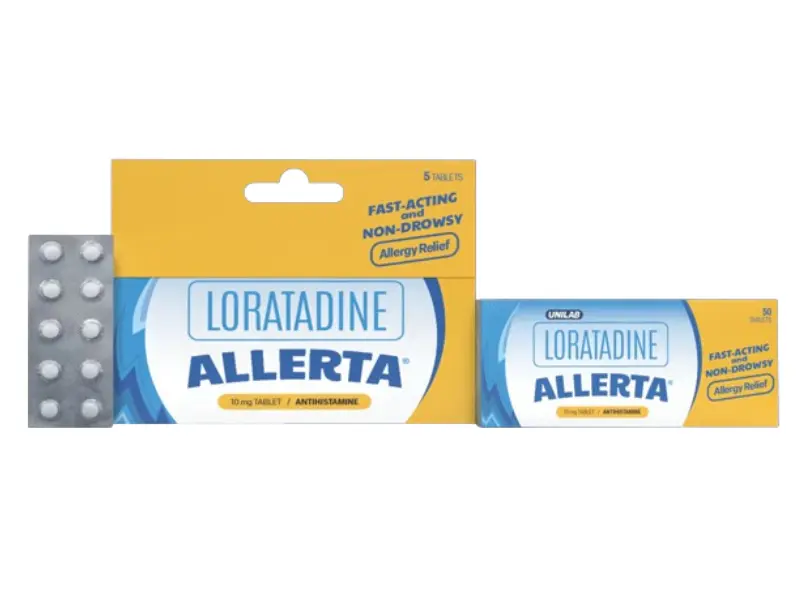
If you’re looking for an everyday non-drowsy allergy medicine, Loratadine (Allerta®) is here to help.
Stay present and productive with Loratadine (Allerta®). Its non-drowsy formula contains Loratadine, which is less likely to cause drowsiness compared to cetirizine and older antihistamine classes.
It helps provide relief of symptoms associated with:
- Allergic rhinitis such as sneezing; runny, itchy nose; and itchy, watery eyes
- Skin symptoms of allergy such as itch and rash
Loratadine (Allerta®) starts working in as fast as 15 minutes, helping you get back to your day without unnecessary delay.
What’s more? It is available at PHP 25.75 SRP only per tablet.
Best of all, no prescription is needed, making it a convenient option whenever seasonal or unexpected allergies get in the way. Just pick it up from your nearest drugstore or order online via Mercury Drug, Watsons, Southstar Drug, Rose Pharmacy, Med Express, Lazada, Shopee, and Big Grocer.
How often should you use this medicine?
This medicine should be taken orally (by mouth) once a day. Or, as recommended by a doctor
Also, remember to make it a habit to double-check the expiration dates of your medications and replace any items that have passed their prime.
For more information on safety, precautions, and other information about this product, please see the Patient Information Leaflet.
If symptoms persist, consult your doctor.
ASC Ref. No. U0030P073126A
References:
- Cleveland Clinic – Antihistamines
- NCBI Bookshelf – Antihistamine Reference
- PubMed – Clinical Study 10748947
- PubMed – Clinical Study 10868555 Objective
- ScienceDirect – Cetirizine and Loratadine Clinical Study
- NHS – Common Questions About Cetirizine
- The Independent Pharmacy – Cetirizine vs Loratadine for Hay Fever Relief
- NHS – Side Effects of Cetirizine
- Chemist4U – Loratadine vs Cetirizine
- ScienceDirect – Cetirizine and Loratadine Clinical Study
- PubMed – Clinical Study 10868555