AMPI: Powering a healthier tomorrow
AMPI: Powering a healthier tomorrow
Amherst Parenterals, Inc. (AMPI) marked a moment of transformation with the inauguration of the Solar Roof Panel Project—a 500-kilowatt grid-tie solar installation at the AMPI plant. The ribbon cutting ceremony held on February 6 symbolized a promise fulfilled to our environment, our community, and our future.
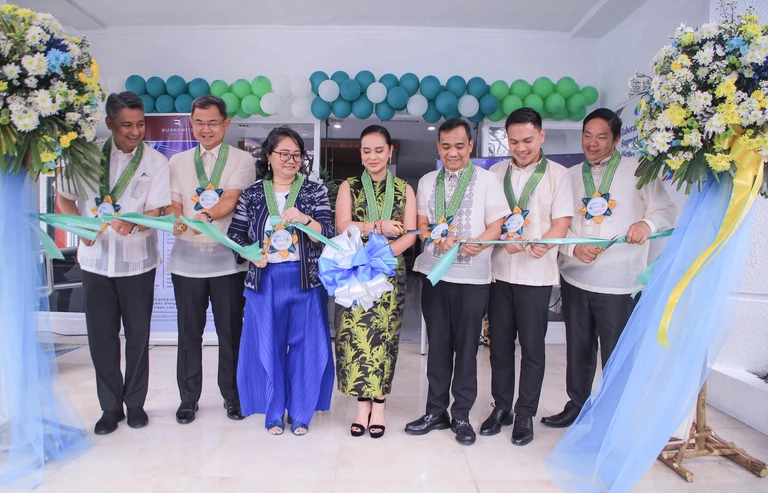
With shared pride, Unilab Group leaders—Senior Vice President and Head of Integrated Product Supply Ms. Maria Tessa V. Castro; Operating Vice President and Head of Supply, Strategy Planning and Operations Mr. Jovito U. Santos; and Division Vice President and Head of Philippine Manufacturing Mr. Michael G. Villegas—unveiled the sea of blue panels now crowning the facility. The ceremony was attended by Sta. Rosa, Laguna Mayor Hon. Arlene B. Arcilla and Vice Mayor Hon. Arnold B. Arcillas.
Mayor Arcillas moved the audience by connecting the project to the local spirit of Sikhayan (Sikap at Kabuhayan)—the city’s celebration of hard work and livelihood.
"This moment symbolizes Amherst’s strong commitment to renewable energy," Mayor Arcillas remarked. "True progress happens when we work together toward sustainable development. To Amherst and Unilab, thank you for leading by example. You are showing how the private sector plays a vital role in shaping a greener, more resilient city."
For the employees who keep the plant running day and night, the project brings a renewed sense of purpose to their daily work. Mr. Villegas spoke candidly about the energy-intensive nature of pharmaceutical production. To keep life-saving medicines safe, systems like cleanrooms and purified water processing must operate continuously.
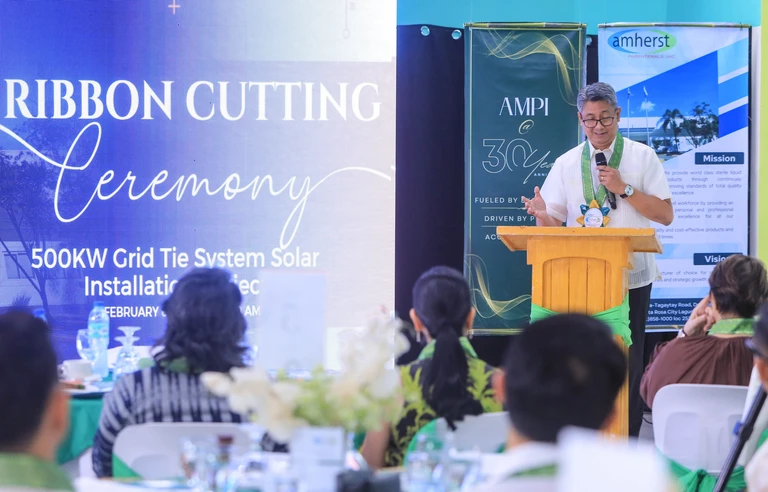
"Today is different," Mr. Villegas reflected. "We are signaling that we are serious about running our operations in a smarter, more future-ready way. Because the sun’s energy is free, we are ensuring that we use it to its fullest potential."
The impact is already tangible. During a trial period in late 2025, the system saved nearly PhP 900,000 in energy costs—savings that strengthen the plant’s long-term competitiveness. More importantly, the system will now provide 20% to 25% of the plant’s monthly electricity requirements.
"Symbolically, we are not just turning on a solar panel system," Mr. Villegas added. "We are turning on a more efficient, responsible, and sustainable way of manufacturing."
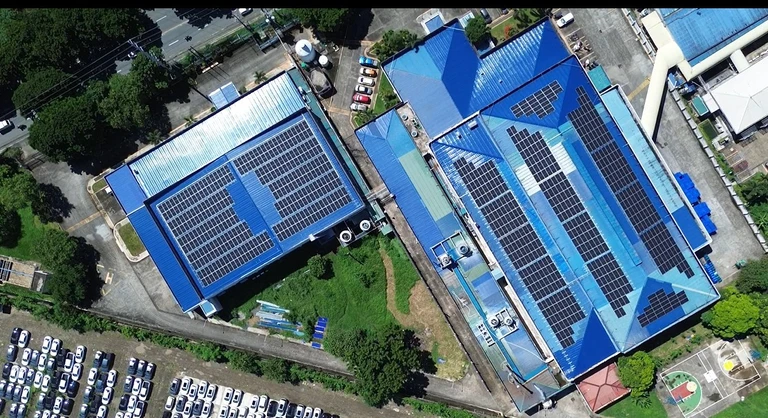
The project generates up to 720 megawatt-hours of clean energy and avoids up to 500 tons of carbon emissions annually. While the numbers are impressive, the true heart of the project is the "why" behind it.
Every kilowatt generated by the sun is a step away from fossil fuels and coal. For every employee at AMPI, it means knowing that the quality medicines they produce are now powered in part by clean, renewable energy. It is a tangible reminder that for the Unilab Group, Husay at Malasakit is not just a slogan—it is built into the very roof over their heads.

When the grid was ceremonially switched on, it activated more than just power—it ignited a new chapter. This Solar Roof Panel Project is a blueprint for the future of Unilab, proving that pharmaceutical excellence and environmental stewardship go hand in hand.
The project stands as a testament to what the Unilab Group can achieve when innovation meets responsibility. Together, we are not just manufacturing medicine, we are powering a cleaner, healthier, and brighter future for every Filipino.
Other Related News
 alt="" draggable="false">
How to earn exciting perks through Alagang Unilab Rewards Program
And when you do go out to replenish your kit or buy vitamins, take advantage of cash e-gifts through the Alagang Unilab Rewards Program
 Corporate News
 alt="" draggable="false">
Mercury Drug Foundation holds NCD awareness walk in Negros Occidental
More than 2,000 participants joined the 14th Walk for Non-Communicable Disease (NCD) Awareness.
Events
 alt="" draggable="false">
Share the ‘Alaga’ strengthens Mandaluyong’s push for better health-seeking behavior
Improving health outcomes in Mandaluyong City requires more than making medical services accessible — it also means encouraging residents.
Partnerships
 alt="" draggable="false">
Unilab Center for Health Policy and Naga City Partner to Pioneer Primary Healthcare Innovation
Unilab Center for Health Policy and Naga City partner to strengthen primary healthcare through digital tools, integrated care frameworks, and scalable solutions supporting Universal Health Care.
Partnerships
 alt="" draggable="false">
Watsons and Unilab Unite 8,000 Runners for Share the Alaga Run at SM Mall of Asia
Watsons Philippines and Unilab gathered 8,000 runners at the Share the Alaga Run, promoting proactive health and everyday wellness for Filipinos nationwide.
Events
 alt="" draggable="false">
WINNING: QC expands private maternal care network
Quezon City is quietly expanding its network of high-performing private maternal care providers, signaling a broader push to strengthen frontline healthcare delivery through public-private partnerships.
Partnerships