fbpixel

Our website uses cookies to help enhance your browsing experience. Continue to browse our site if you agree to our use of cookies as described in Unilab's Cookie Policy .

For information on how we protect your privacy, please read our Privacy Policy .

Recommended Daily Intake of Common Vitamins and Minerals

Recommended Daily Intake of Common Vitamins and Minerals

Read more about the common vitamins and minerals found in supplements to find more about its Recommended Daily Allowance (RDA).

Medically Inspected by: Edilberto B. Garcia, Jr., MD, Maria Cristina H. Ventura, MD, Loreta D. Dayco, MD

boosts your immune system. Taking ascorbic acid is not a solution to get rid of colds, but those who take it regularly may have shorter episodes and milder symptoms. Although the human body does not naturally produce vitamin C, you should still exercise caution in drinking too much ascorbic acid as it may cause diarrhea and stomach pain.

Harvard Health, vitamin C is a water-soluble nutrient, which means that any excess amount is usually excreted in the urine rather than stored in the body. Get your daily dose through healthy ingredients like citrus fruits, vegetables, and supplements. The RDA for ascorbic acid is 120 mg per day for adults and has a tolerable upper intake (UL) level of 2,000 mg daily.

Free radicals are harmful molecules found in pollution and tobacco smoke that can potentially damage your health. Vitamin E can be derived from healthy ingredients like avocados, nuts, and whole grains. Adults need 15 mg of vitamin E every day.

iron deficiency anemia. Iron helps keep your blood healthy and can be commonly found in red meat and leafy green vegetables. The average adult needs about 8 mg of iron per day while pregnant women need about 18 mg to support a healthy pregnancy.

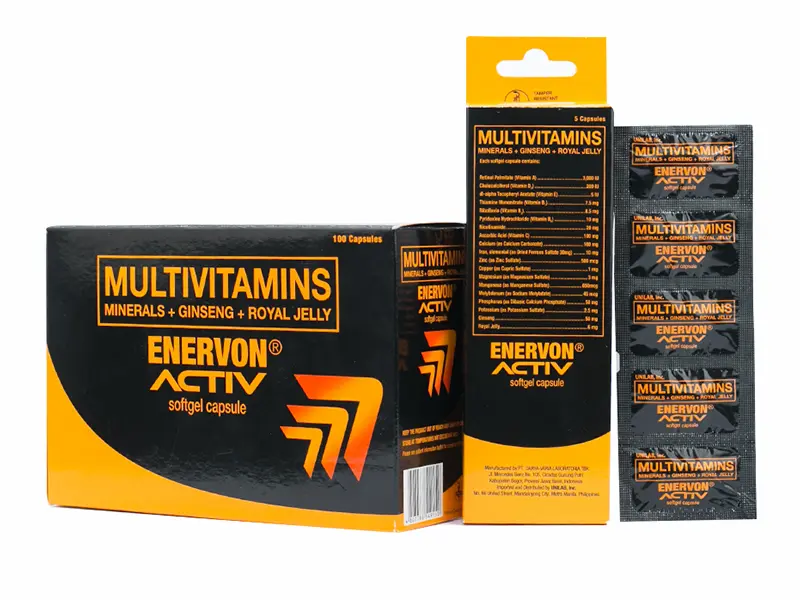
our products page to learn more about our line of vitamins for you and your family. Call your nearest drugstore to check the availability of stocks in your area before visiting.


Chambial, S., Dwivedi, S., Shukla, K., John, P., & Sharma, P. (2013). Vitamin C in Disease Prevention and Cure: An Overview. Indian Journal Of Clinical Biochemistry, 28(4), 314-328.

  • Iron-Deficiency Anemia | National Heart, Lung, and Blood Institute (NHLBI). Nhlbi.nih.gov. (2020). Retrieved 30 April 2020, from .
  • Listing of vitamins - Harvard Health. Harvard Health. (2020). Retrieved 30 April 2020, from .
  • Maggini, S., Wenzlaff, S., & Hornig, D. (2010). Essential Role of Vitamin C and Zinc in Child Immunity and Health. Journal Of International Medical Research, 38(2), 386-414.
  • Moreno, M. (2018). Vitamin D and Your Child. JAMA Pediatrics, 172(7), 708.
  • Office of Dietary Supplements - Vitamin A. Ods.od.nih.gov. (2020). Retrieved 30 April 2020, from .
  • Office of Dietary Supplements - Vitamin C. Ods.od.nih.gov. (2020). Retrieved 30 April 2020, from .
  • Office of Dietary Supplements - Vitamin D. Ods.od.nih.gov. (2020). Retrieved 30 April 2020, from .
  • Orosa, R. (2020). 3 out of 5 Filipinos suffer from Vit-D deficiency. philstar.com. Retrieved 30 April 2020, from .
  • Ran, L., Zhao, W., Wang, J., Wang, H., Zhao, Y., Tseng, Y., & Bu, H. (2018). Extra Dose of Vitamin C Based on a Daily Supplementation Shortens the Common Cold: A Meta-Analysis of 9 Randomized Controlled Trials. Biomed Research International, 2018, 1-12.
  • Veldurthy, V., Wei, R., Oz, L., Dhawan, P., Jeon, Y., & Christakos, S. (2016). Vitamin D, calcium homeostasis and aging. Bone Research, 4(1).
  • Vitamin D. Mayo Clinic. (2020). Retrieved 30 April 2020, from .
  • Vitamin E. Mayo Clinic. (2020). Retrieved 30 April 2020, from .
  • Vitamins and minerals - Vitamin C. nhs.uk. (2020). Retrieved 30 April 2020, from .
  • Vitamins: The Basics. Cleveland Clinic. (2020). Retrieved 30 April 2020, from .
  • Carr AC, Frei B. (1999). Toward a new recommended dietary allowance for vitamin-C based on antioxidant and health effects in humans. Am J Clin Nut.69(6):1086–1107.  
  • Was this article helpful?

    Related Products