
If you’ve ever scanned the back of a chocolate protein bar or talked to that one gym-obsessed friend who swears by whey shakes, you’ve probably heard of amino acids. These small but mighty organic compounds are the building blocks of protein, and without them, your body simply wouldn’t run the way it should.
But here’s where it usually gets confusing: not all amino acids are created equal. They’re divided into two major categories, essential and non-essential. And no, essential doesn’t mean “important” and non-essential doesn’t mean “you don’t need them.” The real difference lies in whether your body can make them on its own. Here’s a breakdown of what they are.
First Things First: What Are Amino Acids?
Your body relies on thousands of proteins, and each one has a specific job. How? It all comes down to amino acids. The order of these tiny building blocks shapes the protein and determines what it does in your body.
Think of amino acids like ingredients in a recipe. Use them in different combinations, and you can make a cake, a salad, or a smoothie. The same goes for amino acids. Mix them in different ways, and you get different proteins, each with its own role in keeping you healthy and energized.
Essential Amino Acids: The Ones You Must Get From Food
There are nine essential amino acids, and your body has zero capability to produce them. So if you don’t eat enough of them, your system is going to miss out big time.
Here they are:
- Lysine
- Methionine
- Histidine
- Isoleucine
- Leucine
- Phenylalanine
- Threonine
- Tryptophan
- Valine
These aminos help with everything from muscle growth to tissue repair to hormone production. Fitness folks love talking about BCAAs (branched-chain amino acids)—that’s leucine, isoleucine, and valine—because they’re helpful in muscle building and recovery.
To get them, incorporate lean meats, eggs, dairy, tofu, nuts, quinoa, fish, and legumes into your diet. Basically, you’ll need a solid balance of protein-rich food sources. The good news? Most Pinoy favorites like chicken adobo, tinolang isda, and even a simple tofu stir-fry are packed with these essential amino acids.
Non-Essential Amino Acids: Your Body Can Make Them
Non-essential sounds like something you can skip, but don’t let the name fool you. Your body needs these 11 amino acids just as much. It’s just that your system is skilled enough to produce them when needed.
These include:
- Alanine
- Asparagine
- Aspartic acid
- Glutamic acid
- Serine
- Arginine
- Cysteine
- Glutamine
- Glycine
- Proline
- Tyrosine
Some of these are considered conditionally essential, meaning your body might struggle to make enough during stress, illness, or rapid growth (like childhood or pregnancy).
These amino acids support immunity, digestion, collagen production, and energy metabolism. They help boost skin health, wound healing, and digestion.
Essential vs. Non-Essential: What’s the Real Difference?
To keep it simple:
- Essential amino acids: Must come from your diet.
- Non-essential amino acids: Your body can create them.
It’s a bit like owning a house: the essential amino acids are the materials you need to build it, and the non-essentials are the tools you use to maintain it.
How Do You Make Sure You're Getting Enough?
You don’t need to memorize all 20 amino acids to stay healthy. You just need a balanced diet with enough protein sources. Here’s how you can do that without stressing:
- Mix plant and animal proteins. If you’re not vegetarian, combining meat, eggs, and plant-based proteins ensures a complete amino acid profile.
- Go for variety. Your body thrives on diversity. So swap between chicken, tofu, fish, beans, and nuts throughout the week.
- Consider complete proteins. Foods like eggs, dairy, quinoa, soy, and fish naturally contain all essential amino acids.
- Supplement wisely, if needed. Not required for most people, but athletes, bodybuilders, or those with certain medical conditions might benefit from amino acid supplements. Always check with a nutritionist or doctor before starting anything.
Why Should You Even Care About Amino Acids?
Because they affect way more aspects of your life than you probably realize. Just think:
- Trying to build muscle? Amino acids are your best friends.
- Feeling sluggish? They help with energy production.
- Want better skin and hair? They play a key role in collagen formation.
- Stressed? Your neurotransmitters depend on amino acids too.
Even your mood is influenced by amino acids, tryptophan, for example, helps produce serotonin, your “feel-good hormone.”
Whether essential or non-essential, amino acids work together to keep your body functioning smoothly. You don’t have to overthink it—just eat a balanced, protein-rich diet and your body will take care of the rest. And the next time someone drops “BCAA” casually into conversation or you see a supplement ad claiming to boost your gains, you’ll know exactly what they’re talking about.
Are You Getting Enough Essential Amino Acids?
Not sure if your diet is covering everything your body needs? Even with a balanced diet, it’s easy to miss key nutrients that help you stay strong, focused, and energized. This is where supplementation can step in to fill the gaps and support your overall health with proper diet and exercise.
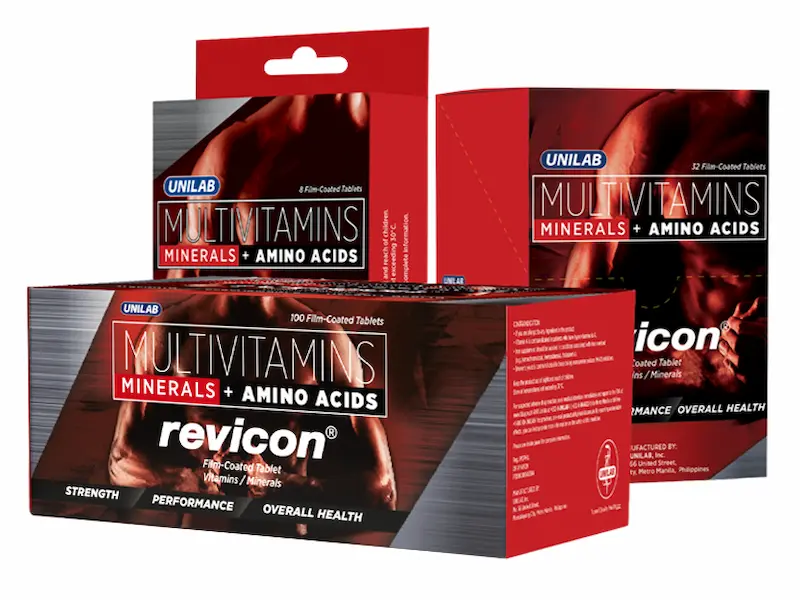
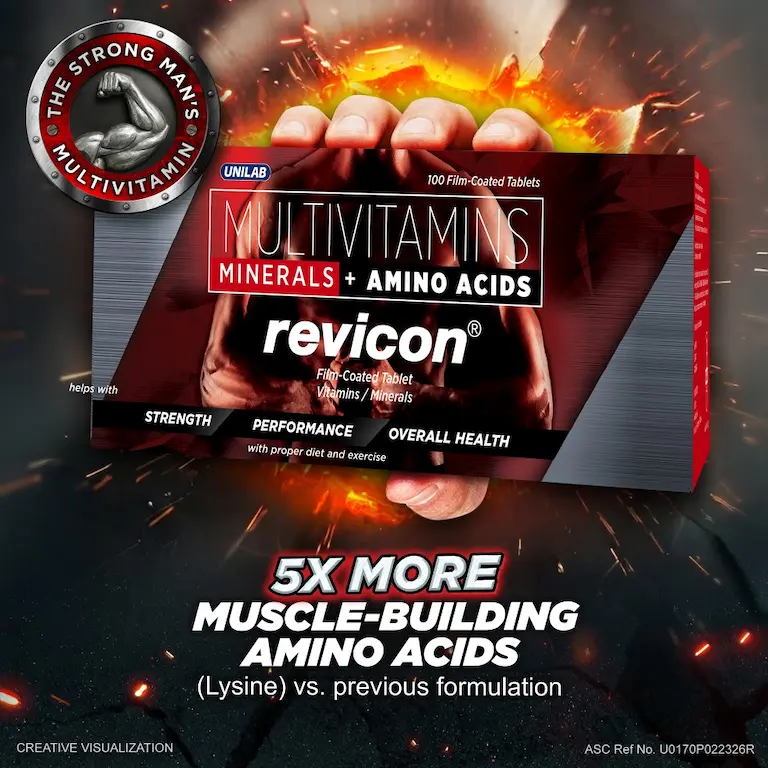
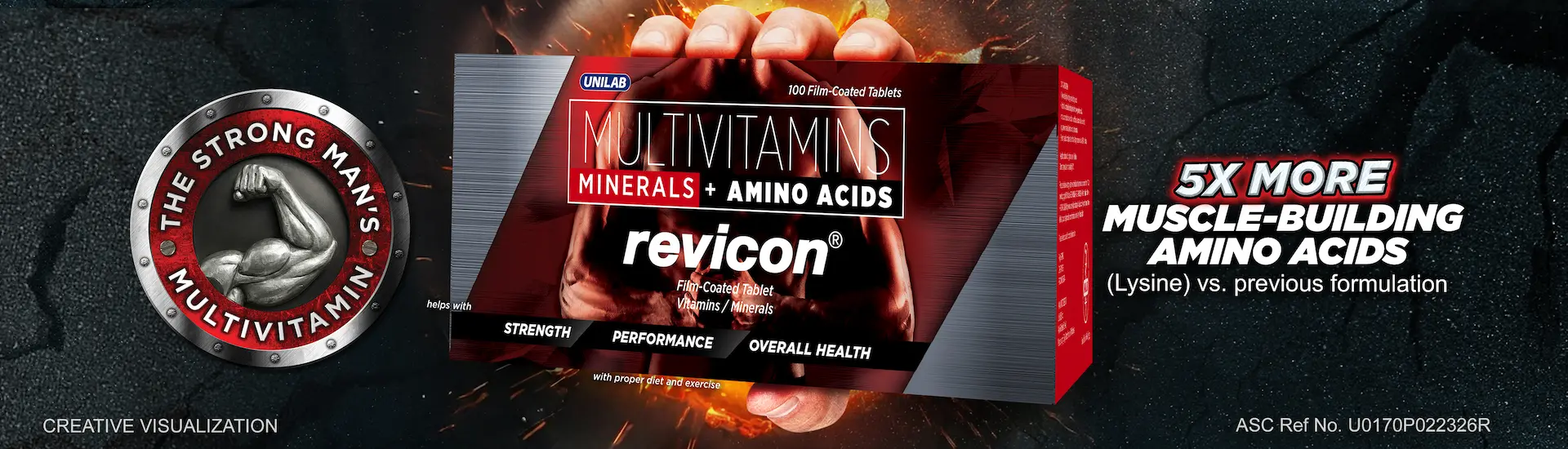
Multivitamins + Minerals + Amino Acids (Revicon®) is designed to do just that! Taken regularly as part of a balanced lifestyle with proper diet and exercise, Multivitamins + Minerals + Amino Acids (Revicon®) may help promote overall wellness by supporting multiple systems in your body. Packed with essential vitamins, minerals, and amino acids, it helps keep your muscles, bones, blood, eyes, and heart in top condition with proper diet and exercise. Other than that, these nutrients work together to support stamina and maintain your body’s everyday functions with proper diet and exercise, so you can stay productive whether you’re at work, handling physical tasks, or balancing multiple responsibilities at home.
If symptoms persist, consult your doctor.
References:
https://medlineplus.gov/ency/article/002222.htm
https://my.clevelandclinic.org/health/articles/22243-amino-acids
https://www.ncbi.nlm.nih.gov/books/NBK557845/
https://www.genome.gov/genetics-glossary/Amino-Acids
ASC Reference Code: U0220P022726R, U0243P062226R